DJI Air 3
by DJI

Overview
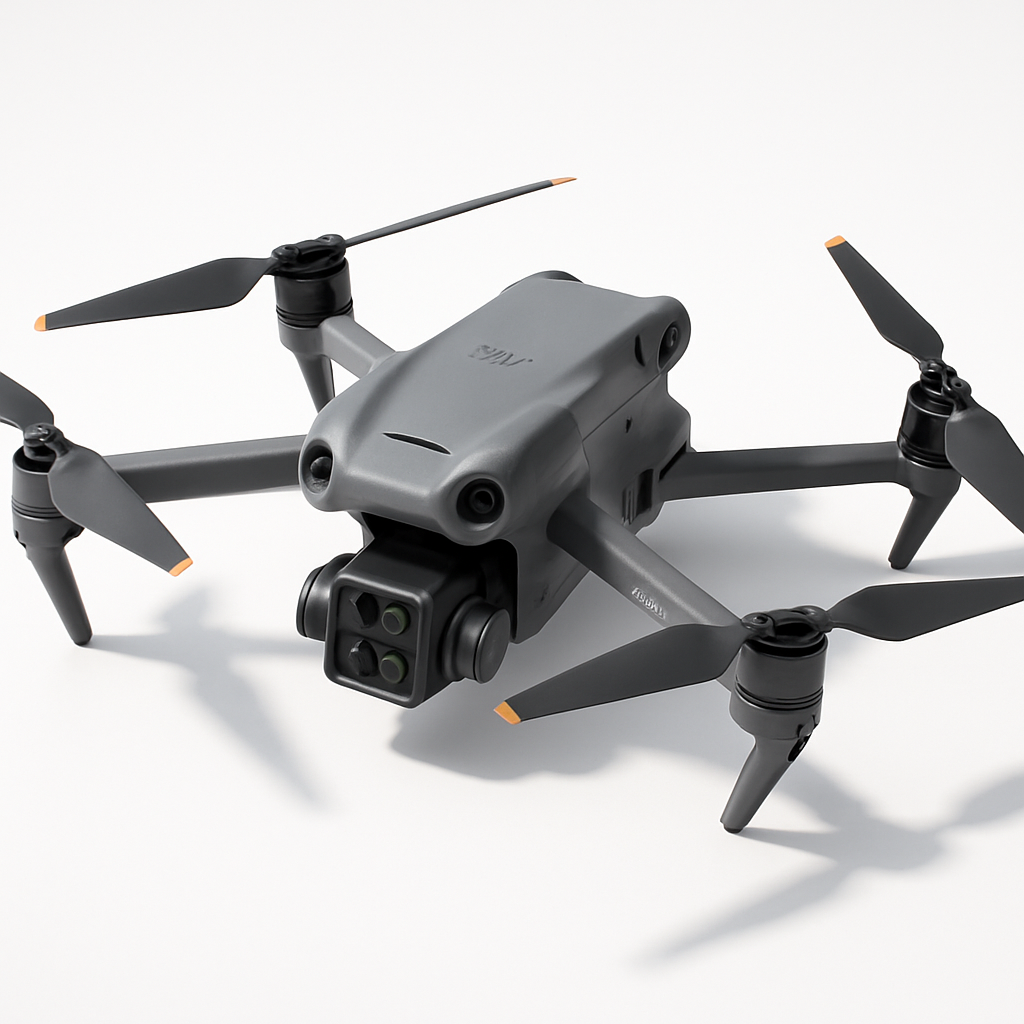
The DJI Air 3 represents a significant evolution in consumer drone technology, positioning itself as a premium aerial photography platform for content creators, real estate professionals, and photography enthusiasts. Building on the success of its predecessors, the Air 3 introduces a dual-camera system that combines a wide-angle and medium telephoto lens, offering unprecedented versatility for aerial imaging without the bulk of professional cinema drones.
This drone fills the gap between entry-level consumer models and high-end professional systems, making advanced imaging capabilities accessible to a broader market. The Air 3's design philosophy centers on delivering professional-quality results while maintaining the portability and ease of use that DJI's consumer line is known for. Its enhanced flight performance and safety features make it suitable for both recreational use and light commercial applications like real estate photography and social media content creation.
Key Specifications
- Maximum flight time: 46 minutes
- Maximum transmission range: 20 km (FCC), 10 km (CE)
- Maximum speed: 21 m/s (Sport mode)
- Weight: 720g
- Wide-angle camera: 1/1.3-inch CMOS, 24mm equivalent, f/1.7 aperture
- Medium telephoto camera: 1/1.3-inch CMOS, 70mm equivalent, f/2.8 aperture
- Video resolution: 4K/60fps, 2.7K/60fps, 1080p/120fps
- Photo resolution: 48MP (both cameras)
- Gimbal: 3-axis mechanical gimbal for both cameras
- Obstacle sensing: Omnidirectional with APAS 5.0
- Operating temperature: -10°C to 40°C
- Wind resistance: 12 m/s (Level 5)
- Internal storage: 8GB
- MicroSD support: Up to 256GB
- Transmission system: O4 with 1080p/60fps live view
Pricing & Configuration
The DJI Air 3 is available in two main configurations. The standard package retails for $1,549 and includes the aircraft, RC-N2 remote controller, one intelligent battery, charging hub, and essential accessories. The Fly More Combo, priced at $1,999, adds two additional batteries, a shoulder bag, ND filters set, and extra propellers, providing better value for serious users.
DJI also offers DJI Care Refresh coverage starting at $169 for one year, which includes accident coverage and replacement services. Additional accessories like extra batteries ($199 each), ND filter sets ($99), and the RC 2 controller with built-in screen ($399) are available separately.
Pros and Cons
Pros:
- Dual-camera system provides exceptional shooting versatility
- Extended 46-minute flight time reduces battery anxiety
- Omnidirectional obstacle sensing enhances safety
- Professional-grade 4K/60fps video recording
- Compact, foldable design maintains portability
- Advanced tracking and intelligent flight modes
- Strong wind resistance for stable footage
Cons:
- Higher price point compared to single-camera alternatives
- Limited to consumer/prosumer applications
- Geofencing can restrict flying in certain areas
- No interchangeable payload options
- Requires registration in most jurisdictions
Who Should Buy This Drone?
The DJI Air 3 is ideal for content creators, photographers, and videographers who need professional-quality aerial footage without the complexity of cinema-grade systems. Real estate professionals will appreciate the dual-camera system for capturing both wide establishing shots and detailed property features. Travel photographers and social media influencers benefit from its portability and image quality.
This drone suits users who have outgrown entry-level models but don't require the advanced features of enterprise systems. It's perfect for those who prioritize image quality, flight time, and safety features over pure affordability. Small businesses offering aerial photography services will find it capable for most client needs.
The Air 3 is less suitable for industrial inspection, surveying, or agricultural applications where specialized sensors and longer flight times are required. Users needing thermal imaging, LiDAR, or other specialized payloads should consider DJI's enterprise offerings instead.
Final Verdict
The DJI Air 3 successfully bridges the gap between consumer convenience and professional capability, delivering impressive image quality through its innovative dual-camera system. While the higher price point may deter casual users, the combination of extended flight time, enhanced safety features, and superior imaging capabilities justifies the investment for serious aerial photographers and content creators. The omnidirectional obstacle sensing and robust build quality inspire confidence, while the intuitive controls maintain DJI's reputation for user-friendly operation. For those seeking a versatile, high-quality aerial photography platform without the bulk and complexity of professional cinema drones, the Air 3 represents an excellent balance of features, performance, and portability.
Pros
- + Dual-camera system with excellent image quality
- + 46-minute maximum flight time
- + Omnidirectional obstacle sensing
- + 4K/60fps video recording
- + Compact and portable design
Cons
- - Limited to consumer applications
- - No interchangeable payloads
- - Higher price than single-camera alternatives
- - Geofencing restrictions in some areas
Compare DJI Air 3 with
Frequently Asked Questions
What is DJI Air 3?
A dual-camera consumer drone designed for content creators and photography enthusiasts, featuring a medium telephoto and wide-angle camera system. The Air 3 offers professional-grade image quality with enhanced obstacle sensing and extended flight time for aerial photography and videography applications.
How much does DJI Air 3 cost?
DJI Air 3 uses a fixed price pricing model with plans starting at $1,549.
What are the main advantages of DJI Air 3?
The key advantages of DJI Air 3 include: Dual-camera system with excellent image quality; 46-minute maximum flight time; Omnidirectional obstacle sensing; 4K/60fps video recording; Compact and portable design.
What are the drawbacks of DJI Air 3?
Some limitations to consider: Limited to consumer applications; No interchangeable payloads; Higher price than single-camera alternatives; Geofencing restrictions in some areas.
What category does DJI Air 3 belong to?
DJI Air 3 is a Aerial Photography tool developed by DJI.
DJI Air 3 Comparisons
Aerial Photography Guides
Best Drones for Real Estate Photography in 2026
Best ToolsThe top drones for real estate agents, brokers, and property photographers. Ranked by image quality, portability, and legal compliance for residential and commercial shoots.
Best Drones for Film & TV Production in 2026
Best ToolsTop cinema drones for professional film and television production. Compare sensor size, RAW video capability, gimbal flexibility, and workflow for broadcast and feature film.
FPV vs Stabilised Camera Drone: Which is Right for You?
How to ChooseUnderstanding the real difference between FPV drones and stabilised camera drones for video work. Matching the right platform to your creative style, subject, and budget.
Other Aerial Photography Tools
View all 17 tools →Autel EVO II Pro V3
Autel Robotics
The Autel EVO II Pro V3 is a professional-grade drone featuring a 6K camera with 1-inch CMOS sensor and advanced obstacle avoidance. Designed for aerial photography, videography, and commercial applications requiring high-quality imaging capabilities.
Autel EVO Lite+
Autel Robotics
The Autel EVO Lite+ is a premium consumer and prosumer drone featuring a 1-inch CMOS sensor capable of 6K video recording and 20MP stills. Designed for aerial photographers and content creators, it combines professional-grade imaging capabilities with intelligent flight modes and obstacle avoidance.
Autel EVO Nano+
Autel Robotics
The Autel EVO Nano+ is an ultra-lightweight consumer drone weighing under 249 grams with a 1/1.28-inch CMOS sensor capable of 4K video recording. Designed for content creators and hobbyists, it offers advanced obstacle avoidance and intelligent flight modes in a compact, travel-friendly form factor.
DJI Air 3S
DJI
DJI's flagship mid-range drone featuring the first consumer forward-facing LiDAR for enhanced obstacle avoidance, dual cameras with 1-inch wide and 3x telephoto sensors, and an impressive 45-minute flight time for professional-grade aerial photography.